Noank is a small place with a big gardening habit. Walk down Main Street or along Pearl Street and Ward Avenue and you see it everywhere: window boxes, hydrangeas against shingled walls, and tidy vegetable beds tucked behind 19th-century houses that once belonged to shipbuilders and lobstermen. Toward Mumford Cove and Morgan Point, lots get bigger and gardens more ambitious.
The problem is that the wildlife likes Noank gardens too. Deer move between the woods at Haley Farm State Park and Bluff Point and the quieter edges of the village, and rabbits and woodchucks are happy to work the yards in between. Here is how to plan a garden fence for Noank’s compact lots, salt air and rocky ground. If you already have a size in mind, our instant fence quote will give you a ballpark price in a couple of minutes.
Why Garden Fencing in Noank Is Its Own Project
A garden fence in Noank is not the same job as one on an open inland lot. Three things shape almost every project we look at in the village:
- Small, close lots. Many homes near the harbor sit close to the street, so the garden fence is on display and has to look good, not just work.
- Salt air. Between the Mystic River mouth, Palmer Cove and Fishers Island Sound, salt reaches most of the village. Cheap wire and plain steel fasteners rust fast here.
- Shallow soil over rock. Ledge and boulders are common, especially on the hill streets. That affects where posts can go and how deep wire can be buried.
Designs That Fit a Village Yard
The framed enclosure
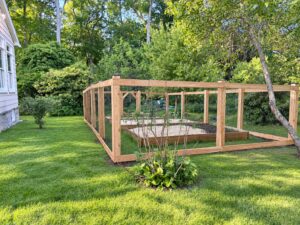
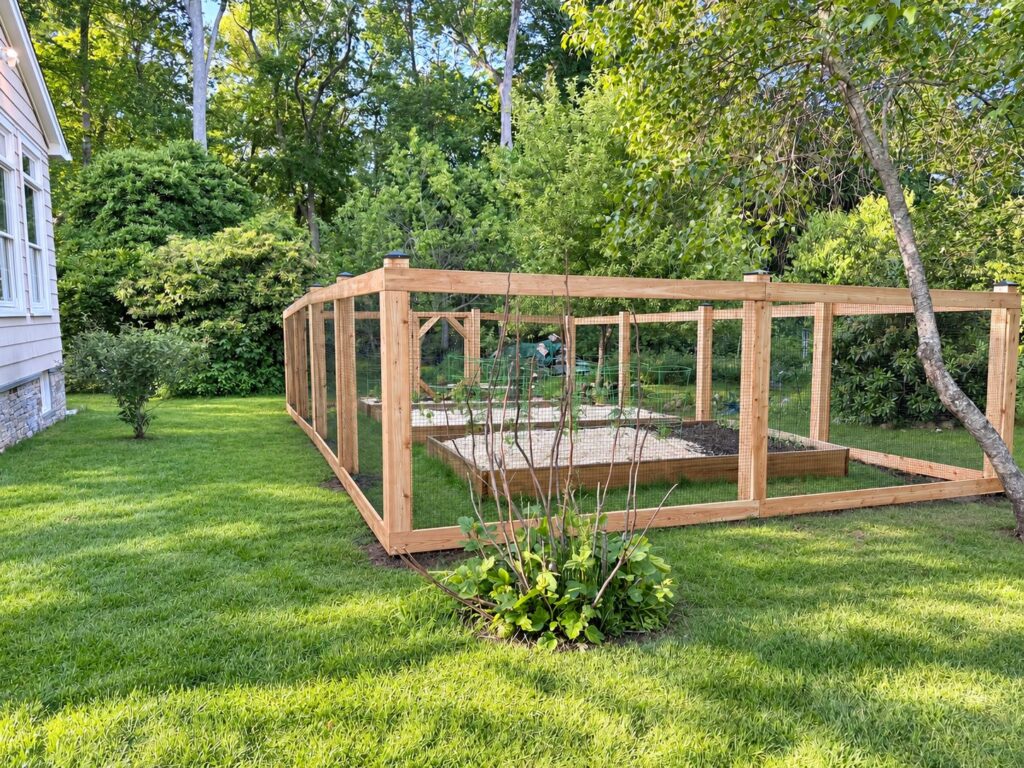
The most popular design for Noank-sized yards is a wood-frame enclosure around raised beds, like the one in the photo above. Posts and rails form a clean box with welded wire in each bay, so it reads as a garden structure rather than a pest barrier. A double gate wide enough for a wheelbarrow makes spring soil deliveries and fall cleanup much easier.
The taller deer enclosure
If deer are the main problem, height is what counts. On the larger lots toward Mumford Cove and the wooded edges of the village, a 7 to 8 foot enclosure with tall posts and black deer mesh in the upper section keeps deer out while staying light to look at. Check the local rules below first.
Materials Guide for Coastal Gardens
Posts and frame
Cedar posts and rails are a great fit for Noank. It resists rot naturally and weathers to the same soft silver as the village’s shingled homes. Pressure-treated lumber is a lower-cost alternative and works well for bottom boards that sit close to the soil. Corner and gate posts take the most strain, so we upsize or brace them.
Wire
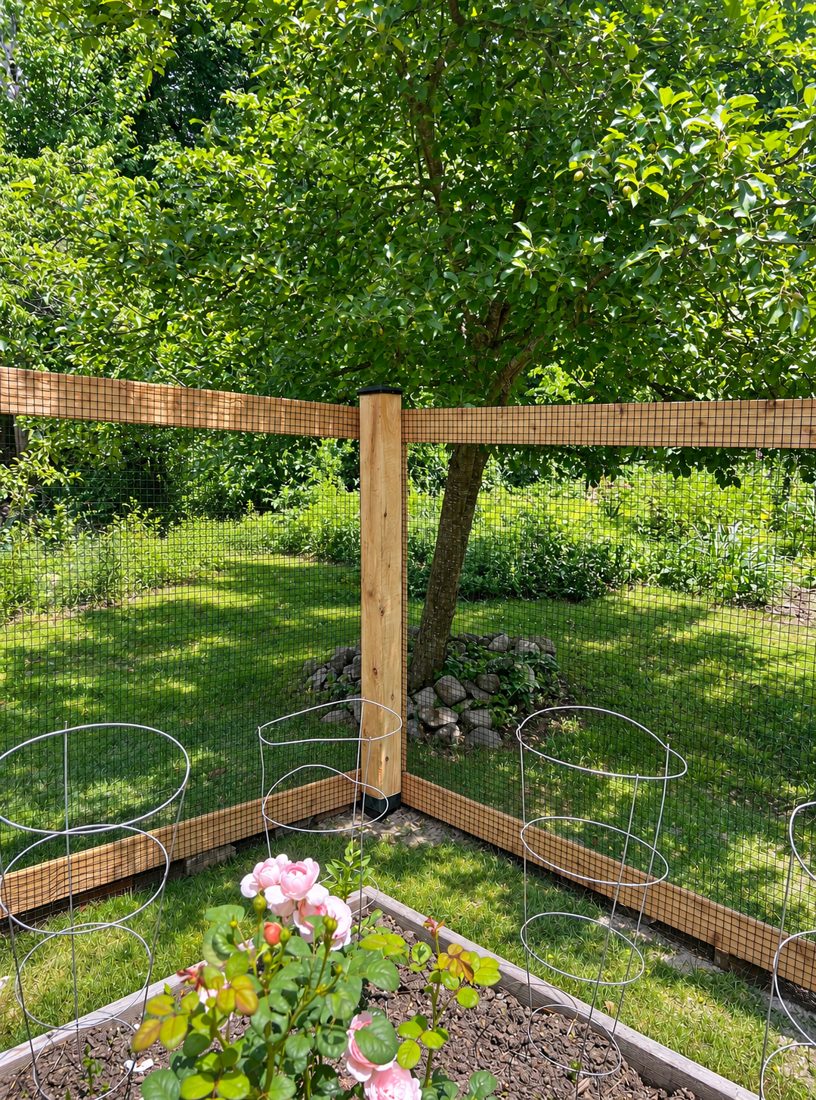
Welded wire with a 2 x 4 inch opening stops deer and larger animals. For rabbits, use 1 x 2 inch mesh, or add a band of hardware cloth along the bottom two feet. Near the water, black vinyl-coated wire is worth the small extra cost because the coating protects the steel from salt and makes the fence almost disappear from a distance.
Fasteners and hardware
This is the detail most often missed on the shoreline. We use corrosion-resistant screws, staples and hinges so the hardware lasts as long as the wood and wire around it.
Below grade
Woodchucks dig. Where the soil allows, we bury the bottom of the wire 6 to 12 inches or bend it outward into an L-shaped apron under the soil. On ledge, where digging is not possible, a pressure-treated bottom board set tight to the ground plus a wire apron laid flat and pinned under mulch does much of the same work.
For more on wood options, see our wood fence page. Our guide to garden fence installation in Smithfield, RI goes deeper on identifying which animal is eating your plants, and our post on split rail fence installation in Old Saybrook covers another open, low-profile option for shoreline yards.
Noank Rules and Local Notes
Noank is a village within the Town of Groton, but zoning here is handled by the Noank Fire District Zoning Commission, not the town. Under the district’s current zoning regulations, fences and walls are generally allowed in yards up to eight feet tall, and nothing on a corner lot may block the view of the street within the corner sight triangle. The village is also a National Register historic district, and the district’s design review rules can apply in the Village Residential zone and along certain streets, including Brook Street, Prospect Hill Road, Elm Street, Spicer Avenue and Wilbur Court. When a building permit is needed, the zoning approval from the district comes first, then the permit from the Town of Groton.
Rules change and depend on your exact lot, so check with the Noank Fire District zoning office before you build. Waterfront properties may also need coastal review. We go over what applies to your address during the estimate.
Planning Tips From Shoreline Gardens
- Follow the sun first. Big oaks and maples shade many village yards. Site the enclosure where beds get at least six hours of sun, then design the fence around it.
- Know your line. On tight lots it is easy to guess wrong. If you are not sure where the boundary is, a survey is cheaper than moving a fence.
- Build before spring. Late fall and winter are a good time to plan and install, so the fence is ready before the first seedlings go in.
How Our Installation Process Works
- Quote: Start with our instant quote or book a free on-site estimate.
- Design: We walk the yard with you and settle on layout, height, wire, wood and gate locations.
- Prep: We confirm requirements for your address and request utility markings through Call Before You Dig (811).
- Install: Posts are set and checked, then rails, wire and gates go on. Most residential garden fences take one to two days once materials arrive.
If you are looking beyond the garden, our Groton fence company page covers the full range of fences we install in Noank and the rest of Groton.
Frequently Asked Questions
Do I need a permit for a garden fence in Noank?
Possibly. Zoning in Noank is handled by the Noank Fire District Zoning Commission rather than the Town of Groton, and design review can apply in parts of the village. Height, corner lots and nearness to the water all matter. Check with the Noank Fire District zoning office before you build, and we will review what applies to your address during the estimate.
How tall should a garden fence be to keep deer out in Noank?
For deer, plan on about 7 to 8 feet of height, or a shorter fence combined with an enclosed top or a tight, narrow layout that deer will not jump into. If your main problem is rabbits and woodchucks, a 4 foot fence with small-opening wire at the bottom and wire buried below grade usually does the job.
What wire holds up best near the water?
Black vinyl-coated welded wire is our usual pick close to the Sound. The coating protects the steel from salt air and it fades into the background visually. We pair it with corrosion-resistant fasteners.
Can you build a garden fence on ledge or rocky ground?
Yes. A lot of Noank sits on shallow soil over rock. We adjust post spacing around rock and pin or core posts into ledge where needed. We request utility markings through Call Before You Dig (811) before any digging.
How much does a garden fence cost in Noank?
It depends on size, height, wire type, gates and ground conditions. Use our instant quote tool at fenceprosdirect.com/instant-quote for a ballpark in a couple of minutes, or call 401-552-4845 to book a free on-site estimate.
Get a Free Garden Fence Estimate in Noank
Whether your garden sits behind a village house near the harbor, on a hillside lot off Prospect Hill Road or out toward Mumford Cove, Fence Pros Direct can help you plan a garden fence that keeps the critters out and fits the character of the village. We bring 25 years of construction experience to every project. Get a price with our instant fence quote, call 401-552-4845, or email sales@fenceprosdirect.com.
About Fence Pros Direct
Fence Pros Direct is registered in Connecticut as a Home Improvement Contractor (HIC.0705172) and brings 25 years of construction experience to homeowners in Southeastern Connecticut and Rhode Island. Rated 4.9 stars on Google. Call 401-552-4845 or get an instant quote.